ON THIS PAGE 10 sections
What is the difference between programmatic SEO and AI content?
Programmatic SEO publishes pages from a structured database via code templates, where each page provides utility (a unique data slice, comparison, or calculator). AI content uses LLMs to bulk-generate text that fills space without unique value. Google rewards the first and demotes the second.
Most companies confuse programmatic SEO with AI-generated spam. They are opposites. Programmatic SEO solves specific long-tail problems by publishing thousands of landing pages based on a structured database and code-based templates — a critical component of comprehensive topic coverage. AI spam just fills space. One builds revenue infrastructure; the other burns your crawl budget.
You do not need a bigger content team. You need a better database.
In March 2026, the digital landscape is littered with websites that thought “AI SEO” meant asking an LLM to write 5,000 blog posts about “The Future of Marketing.” Google’s algorithms—specifically following the March 2024 and March 2026 Core Updates—have become ruthless at de-indexing this low-value, hallucinogenic fluff.
Yet, industry leaders like Zapier, Canva, and TripAdvisor dominate search results with millions of pages. They aren’t writing these pages by hand. They are using programmatic SEO.
The difference isn’t volume; it’s architecture. While competitors are “prompt engineering” mediocre articles, market leaders are engineering database schemas. This is not a marketing hack. It is an infrastructure asset.
Here is why structure wins over volume, and how to build a system that turns search into a predictable revenue channel. For the full technical blueprint, read our complete programmatic SEO architecture guide.
What is Programmatic SEO?
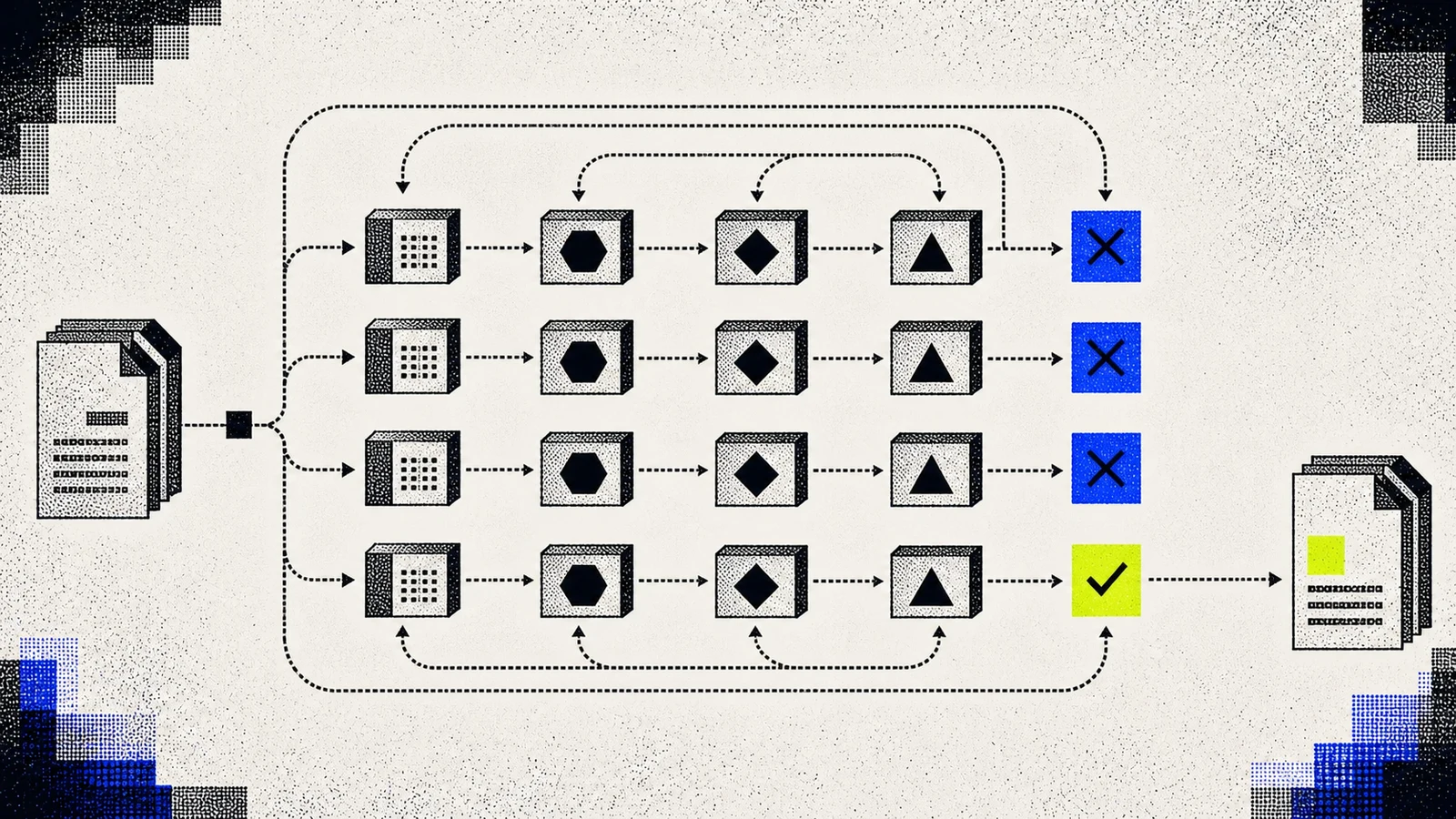
Programmatic SEO is the intersection of code, data, and content. It addresses massive search volume by creating thousands of landing pages at scale—not by writing them one by one, but by connecting a structured database to a template.
Think of traditional SEO like a craftsman hand-carving a chair. It’s effective, but unscalable. Programmatic SEO is the assembly line. It produces thousands of chairs. Both serve the user’s need to sit, but only one scales infinitely.
If you have searched for “Best Italian restaurant in [City]” on TripAdvisor or “Connect [App A] to [App B]” on Zapier, you have used a programmatic page. These companies didn’t hire writers to type out “The best restaurant in Rome is…” Instead, they built a database containing:
- Entities: Restaurants or Apps.
- Attributes: Locations, Ratings, Pricing, Features, API Endpoints.
- Relationships: Which restaurant is in which city? Which app connects to which app?
They built a single page template that pulls these variables dynamically. When a user searches, the system serves a page perfectly matched to that intent.
By 2026, case studies show that major SaaS aggregators can derive 40-80% of their organic traffic from these programmatic structures. It is the only efficient way to capture the “long tail” of search—millions of specific, low-volume queries that aggregate into massive high-intent traffic.
The Difference Between Programmatic SEO and AI Content
There is a dangerous misconception that AI SEO is simply “automated writing.” This trap kills growth.
When CMOs say they want to use AI for SEO, they often mean having an LLM churn out generic blog posts. This fails for two reasons:
- Hallucinations: LLMs are probabilistic. They guess the next word. If you ask them to write about a niche technical topic, they often fabricate details.
- Lack of Unique Value: Google penalizes unhelpful content. If an AI can write the answer in 30 seconds without unique data, the content is a commodity with no incentive to rank.
Programmatic SEO is different because it is deterministic. It relies on structured data, not creative writing.
If your database says “Product A costs €50/month,” the programmatic page displays “€50/month.” It will never hallucinate “€20/month” because it isn’t “writing”—it’s rendering data.
| Feature | AI-Generated Content (The Trap) | Programmatic SEO (The System) |
|---|---|---|
| Source | Large Language Models (Probabilistic) | Structured Database (Deterministic) |
| Accuracy | High risk of hallucination | 100% accurate (based on your data) |
| User Value | Often generic summaries | Specific, data-rich answers |
| Scale Constraint | Quality drops as volume increases | Quality remains constant at any scale |
| Google Risk | High (De-indexing for “Unhelpful Content”) | Low (If data satisfies user intent) |
If you are a SaaS company, your value isn’t your blog. Your value is your data—your integrations, templates, comparisons, and use cases. Programmatic SEO is the mechanism for exposing that value to search engines.
How to Build a Programmatic SEO Architecture
You cannot “write” your way into programmatic success. You must build it. This requires shifting from an “editorial calendar” to a “database schema.”
This process is technical. It requires a developer, a data specialist, and an SEO architect working in unison. Here is the 3-part system for building a revenue-generating engine.
1. Defining the Dataset and Variables
The soul of pSEO is the database. Garbage in, garbage out. Before you think about keywords, identify your entities. What “objects” does your business deal with?
- Recruiting Platform: Job Titles, Skills, Cities, Salary Ranges.
- Fintech App: Currencies, Stock Symbols, Regulations, Banks.
Next, map the variables. These are the database columns that populate the page. For a head term like “Best Project Management Tool for [Industry],” your database needs:
Pricing_Model(e.g., “Per seat” vs “Flat rate”)Key_Features(e.g., “Gantt Charts,” “Kanban”)User_Rating(Aggregated data)Integration_List(What does it connect to?)
You aren’t writing paragraphs; you are filling cells. Use scraped data, public APIs, or—best of all—proprietary data no competitor possesses.
2. Designing the Page Template for Intent
Do not feed this data into a standard blog post template. If a user searches “Salesforce vs HubSpot,” they want a comparison table and feature toggles, not a 2,000-word essay.
Your template must match User Intent:
- Transactional: Pricing cards, “Get Started” buttons, trust signals.
- Informational: Charts, graphs, bulleted lists.
The template is the skeleton containing the HTML structure and variable placeholders.
- H1 Code:
<h1>Top Rated Project Management Tools for {{Industry}} Teams</h1> - Body Code:
<div class="pricing-card">Average Cost: {{Avg_Price}}</div>
When the system runs, it swaps {{Industry}} for “Construction” and {{Avg_Price}} for “€200/mo.”
3. Integrating Generative Engine Optimization (GEO)
This is where AI actually belongs. While core data (prices, specs) must come from your database, a page of pure tables can feel sterile.
We use Generative Engine Optimization (GEO) to hybridize the process. We deploy AI agents to write unique summaries based strictly on the row data.
- The Prompt: “Write a 50-word summary explaining why {{Product_Name}} is good for {{Industry}}, referencing {{Feature_1}}.”
- The Result: A unique, readable paragraph adding context to the hard data.
This “Programmatic + AI Hybrid Model” combines the scale and accuracy of a database with the readability of AI-assisted text.
Map your entity, attribute, and relationship columns
| Dimension | Programmatic SEO | AI Content |
|---|---|---|
| Data Source | Structured database (CSV, API) | Training data + prompt context |
| Quality Control | Template-guaranteed consistency | Requires human review |
| Scalability | 10K+ pages in hours | 100s of pages per day |
| Uniqueness | Variable data, same structure | Unique text, variable quality |
| Risk | Thin content penalties | Hallucination, generic output |
| Cost per Page | €0.01–0.10 | €0.50–5.00 |
| Best For | Location/product pages | Blog posts, guides, FAQs |
Avoiding the ‘Thin Content’ Penalty
The fear is real: “If I publish 10,000 pages, won’t Google ban me?”
If you publish 10,000 empty pages, yes. Google classifies this as “Doorway Pages” or “Thin Content.” This happens when you generate pages for every keyword permutation even without data.
- Bad pSEO: Generating “Best CRM for Underwater Basket Weavers” with zero industry-specific data.
- Good pSEO: Generating a page only when you satisfy a “Minimum Viable Content” threshold.
The Rule: If a database row lacks 50% of the required fields, do not publish that page.
It is better to have 1,000 data-rich pages than 50,000 thin ones. Google rewards depth. If your “Marketing Agency Software” page lists 15 specific tools with real pricing, it is useful. If it lists generic advice, it is spam.
Handling Scale: Indexing, Sitemaps, and Crawl Budget
When you move from 100 to 100,000 pages, you enter the realm of enterprise technical SEO. You are now managing Crawl Budget—the finite attention Googlebot gives your site. A thorough programmatic SEO architecture is essential before scaling to this level.
Sitemap Segmentation
Do not dump 50,000 URLs into a single sitemap.xml. Segment your sitemaps by category (e.g., sitemap-integrations.xml, sitemap-locations.xml) or ID ranges. This allows you to diagnose exactly which batches Google is ignoring.
Internal Linking Structure
Google discovers pages through links. If you generate 10,000 “orphan pages” (pages with no internal links), Google will never find them. Use a Hub-and-Spoke model based on topical authority clusters:
- Hub Page: “All Integrations” (Links to top categories).
- Sub-Hub: “CRM Integrations” (Links to specific app pages).
- Spoke: “Salesforce Integration.”
Render Strategy: SSG vs. SSR
Speed is a ranking factor.
- Server-Side Rendering (SSR): Builds the page when requested. Slower.
- Static Site Generation (SSG): Pre-builds pages as HTML files. Loads instantly.
For SEO automation, we generally recommend SSG or incremental static regeneration (ISR).
How a hub and spoke structure routes crawl budget
The Revenue Impact
Why go through this technical headache? Because of the long tail of revenue.
In B2B SaaS, the highest converting keywords often have the lowest volume.
- User A: “CRM software” (Volume: 50,000). Browsing. Conversion: 0.5%.
- User B: “CRM with QuickBooks integration for real estate” (Volume: 10). Buying. Conversion: 15%.
You cannot write a manual blog post for User B; the volume is too low to justify the cost. But with programmatic SEO, you can capture User B, C, and D automatically. Aggregating 10,000 “low volume” pages generates significant pipeline.
Estimate your long tail revenue from programmatic pages
The Verdict: Don’t Just Write. Architect.
We are in the era of database-driven content. The winners in 2026 are not the companies with the loudest blogs, but those with the smartest infrastructure.
AI SEO and Generative Engine Optimization are powerful tools, but they are the engine, not the car. Programmatic SEO is the chassis. If you want predictable revenue growth, stop treating SEO like a creative writing contest. Treat it like an engineering problem.
- Audit your proprietary data.
- Identify the repetitive, high-value problems your customers search for.
- Build the system that answers them at scale.
Both approaches sit inside the same agentic SEO operating model. For high-stakes B2B content where hallucinations are unacceptable, a RAG pipeline grounded in your own corpus is the bridge between programmatic predictability and AI flexibility — the difference is where the human signs off.
Q01 Is programmatic SEO the same as AI content? +
Q02 Will Google penalize programmatic SEO? +
Q03 What data do I need for programmatic SEO? +
Q04 Can AI play any role in programmatic SEO? +
- [01] DOC
- [02] GUIDE