ON THIS PAGE 10 sections
What is programmatic SEO architecture?
Programmatic SEO architecture is the systematic generation of landing pages at scale using database-driven templates, code-based rendering, and structured datasets. Each row in your database becomes one URL with unique utility (a data slice, comparison, or tool), allowing one engineering effort to capture thousands of long-tail queries.
Programmatic SEO architecture is the systematic generation of landing pages at scale using database-driven templates, code-based rendering, and structured datasets — Zapier’s thousands of integration pages and TripAdvisor’s per-hotel coverage are the canonical examples. It treats SEO as a data problem, not a writing exercise, and trades a content team for a pipeline of structured data plus a rendering layer.
This is how you capture long-tail search intent at the scale where a manual content team would take a decade. If you are paying humans to write thousands of location pages, integration guides, or comparison articles, you are burning capital that should be funding the infrastructure that replaces them.
Defining Programmatic SEO Architecture: Beyond the Content Mill
Most B2B SaaS companies are stuck in a manual trap. You hire a content manager, they hire three freelancers, and together they produce four blog posts a week. At that velocity, capturing the total addressable market (TAM) of your search intent will take a decade. While high-authority manual content still has a place for brand building, the “Content Mill” approach for capturing long-tail search volume is dead. It is slow, expensive, and mathematically incapable of scaling. Programmatic SEO architecture is an infrastructure play. It involves engineering a system where a single database row creates a unique, high-value landing page. When Zapier built thousands of integration pages (e.g., “Connect Gmail to Slack”), they didn’t write them. They engineered them. When TripAdvisor generates a page for every hotel in every city, they don’t have a legion of travel writers. They have a database.
The Technical Truth About Automation
There is a pervasive myth in the SEO industry that Google penalizes automation. This is false. Google penalizes low value. Google’s algorithms are agnostic to the method of creation. Google’s guidance on AI-generated content says it rewards high-quality content however it is produced, and that appropriate use of automation is not against its guidelines. The scaled content abuse policy targets pages generated mainly to manipulate rankings, no matter how they are created. If a programmatically generated page solves a user’s specific problem faster than a manually written 2,000-word essay, the programmatic page wins. I don’t sell “AI writing” or “bulk content.” I sell database-driven infrastructure. We treat your website as an application, not a brochure. By architecting a system that marries proprietary data with high-performance rendering, we enable scaling organic landing pages without the linear cost of human capital.
The Engineering Gap: Why Traditional Content Marketing Fails at Scale
Let’s look at the math. It is brutal. Suppose your SaaS product has 50 integrations, and each integration has 20 distinct use cases. That is 1,000 potential landing pages.
- Manual Approach: 1,000 pages × €300 (per writer/editor/upload cycle) = €300,000. Time to execute: 18–24 months.
- Programmatic Approach: One engineered template + Database Setup + API connection. Cost: Fixed development time + compute credits. Time to execute: 4-8 weeks.
The manual approach bleeds cash. It destroys your LTV:CAC ratio before you even rank.
The Unit Economics of Search
Traditional content marketing fails at scale because it treats every page as a unique art project. In a technical environment, we treat pages as instances of a class. By shifting to a programmatic architecture, you reduce the marginal cost of an additional landing page to near zero. Once the engine is built, scaling from 100 pages to 10,000 pages is a matter of data ingestion and vector database costs, not human labor. This is Revenue Operations. We are connecting content velocity directly to CAC reduction. If your competitors are writing manually while you are deploying programmatically, you are operating with an unfair asymmetry. You can flood the market with high-intent assets while they are still drafting briefs. For a deeper dive into the financial modeling of this strategy, review our analysis on SEO Unit Economics.
Compare manual and programmatic page costs
Manual versus programmatic cost for your page set
Manual cost grows with every page. Programmatic cost is a fixed build plus compute per page.
Core Components of a Revenue-Driven Search Engine
If you think you can execute this with a WordPress plugin, stop reading. You cannot build a Ferrari engine with LEGO blocks. To deploy SEO for enterprise companies or high-growth SaaS, you need a headless architecture. We are moving beyond the CMS and into the realm of application development.
1. The Database Layer (Vector & Relational)
The foundation of programmatic SEO is data. If your data is weak, your pages will be spam. We move beyond simple CSV uploads. We architect solid backends using PostgreSQL for structured relational data (e.g., “Software A integrates with Software B”). However, for true semantic dominance, we integrate Vector Databases (like Pinecone or Weaviate).
- Relational DBs handle the hard facts: pricing, features, API limits.
- Vector DBs handle the semantic relationships: clustering “project management” with “task tracking” automatically.
This allows the system to understand “attributes.” We don’t just paste text; we dynamically populate templates based on complex relationships between data points. This requires a robust headless CMS and a vector database integration.
2. The Rendering Layer (Next.js & Edge SEO)
How these pages are served is as critical as what is on them. We use Next.js because it allows for Incremental Static Regeneration (ISR).
- SSR (Server-Side Rendering): Good for dynamic data, but can be slow.
- Static Site Generation (SSG): Fast, but build times for 10,000 pages are unmanageable.
- ISR: The sweet spot. You build the critical pages statically, and the rest are generated on-demand and cached at the edge.
This is non-negotiable. Edge Computing (via Cloudflare Workers or Vercel Edge) allows us to serve these localized or specific pages instantly. Speed is not just a UX metric; latency kills ARR. Google’s Core Web Vitals guidance sets a good Largest Contentful Paint at 2.5 seconds or less. Templates that miss it at scale put the user experience of thousands of pages at risk.
3. The Semantic Layer (LLMs & Entity Extraction)
This is where Agentic AI enters the architecture. We do not use ChatGPT to “write articles.” We use LLMs via API as data processors.
- Entity Extraction: We feed the LLM raw documentation or unstructured data and ask it to extract specific entities (Features, Pricing Models, Compliance Standards) to populate our database.
- Dynamic Synthesis: We use Agents to synthesize unique value propositions based on the specific combination of variables (e.g., “Why Tool A is better than Tool B for Enterprise HealthTech”).
We deploy autonomous agentic workflows to keep this data fresh. An agent can monitor your product changelog and automatically update the “Features” column in your database, which triggers a re-render of 500 comparison pages. Learn how to deploy autonomous agentic workflows.
Trace a page through the three layers
How one database row becomes a page
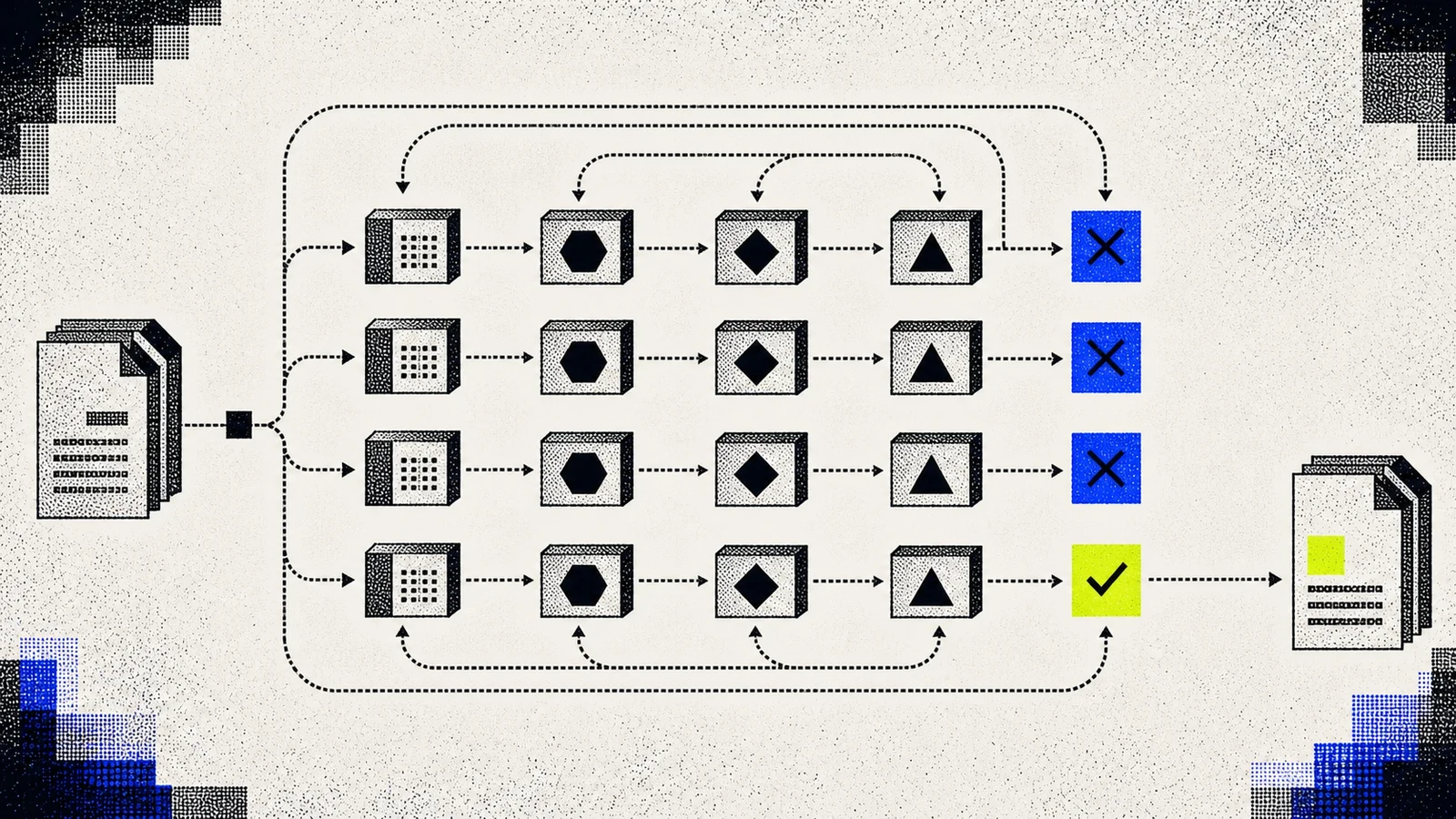
The three layers in order: the semantic layer fills the database, the database feeds the template, the rendering layer serves it.
- 01
Collect
Raw documentation, changelogs, integration lists and other unstructured data.
OutputSource material - 02
Extract
An LLM, used via API as a data processor, pulls features, pricing models and compliance standards.
OutputStructured fields - 03
Store
PostgreSQL holds the hard facts. A vector database such as Pinecone or Weaviate holds semantic relationships.
OutputOne row per page - 04
Template
Conditional logic picks components, e.g. a video when the integration has one.
OutputA layout that fits the row - 05
Render
Next.js ISR builds critical pages statically and the rest on demand, cached at the edge.
OutputFast pages, with an LCP target of 2.5 seconds or less
How to Build a Programmatic SEO Framework (The Execution)
Execution is where strategy goes to die. Here is the blueprint for building the engine.
Step 1: Data Acquisition
You cannot automate what you do not possess.
- Internal Data: Your proprietary datasets (user reviews, usage statistics, integration lists).
- External APIs: Pulling data from G2, Capterra, or public datasets.
- Scraping: Building custom scrapers (Python/Selenium) to aggregate specs from competitor documentation.
Step 2: Taxonomy Design
Structure precedes content. You must define the URL hierarchy and the taxonomy and folksonomy of the project.
- Bad:
domain.com/blog/tool-a-vs-tool-b - Good:
domain.com/integrations/{category}/{tool-a}-vs-{tool-b}
This structure tells Google exactly how to categorize your thousands of new pages — and it reinforces the topical authority architecture that search engines reward. International builds add another constraint layer; the localization engineering architecture covers locale URLs, hreflang, and rendering without creating collisions.
Step 3: Template Engineering
We design the skeleton. The database provides the muscle. Code logic (e.g., {{variable}} injection) determines the layout.
- If {Integration} has {Video}, render Video Component.
- If {Competitor} price > {Our_Price}, render “Savings Calculator” Component.
This conditional logic ensures that 5,000 pages do not look identical. They adapt to the data they present.
Before scaling the template, decide which fields are deterministic data and which genuinely need synthesis. The programmatic versus AI content framework is the practical boundary: automation should multiply unique inputs, not disguise repeated ones.
Step 4: QA Automation
You cannot manually check 5,000 pages. We write Python scripts to crawl our own staging environment.
- Check for broken layouts.
- Verify distinct
<title>tags. - Ensure critical rendering paths are clear.
The release gate should follow a repeatable technical SEO operating model: define URL eligibility, render the output, verify indexability, and retain evidence for the decision. Canonical behavior also belongs in the template contract; the canonical tags guide shows how to prevent thousands of generated URLs from declaring conflicting preferred versions.
Mitigating Risk: Index Bloat and Crawl Budget Management
The danger of programmatic SEO is creating a “Thin Content” graveyard. If you generate 10,000 pages and Google indexes only 200, you have failed. Worse, you have wasted your Crawl Budget. For large sites, infinite URL spaces or low-quality pages prevent Googlebot from discovering your high-value assets.
The Hub and Spoke Content Model
To prevent this, we engineer a hub and spoke content model programmatically.
- Hub: The “Integrations” main page.
- Spoke: The individual “Tool A” page.
- Sub-Spoke: The “Tool A vs Tool B” page.
Every page must be internally linked logically. No orphans.
Avoiding Duplicate Content
Google groups duplicate and near-duplicate pages and picks one canonical to show. Pages that differ only by a swapped keyword are also the pattern the scaled content abuse policy describes. If we simply swap the keyword “New York” for “London,” we risk the pages being folded together or ignored. We must change the data points.
- The “London” page must show London-specific pricing, local case studies, and distinct regulatory compliance data.
- The “New York” page must show US pricing and local partners.
We use variable data points to ensure sufficient uniqueness. The algorithm must see a distinct entity, not a spun duplicate.
Programmatic risks and how to prevent them
Where programmatic builds go wrong, and the fix
Each fix belongs in the data or the template, so it applies to every page at once.
| Risk | What it looks like | Prevention |
|---|---|---|
| Thin content | 10,000 pages generated, 200 indexed | Publish only rows whose data solves a specific problem. |
| Keyword-swapped duplicates | London and New York pages differ only by the city name | Change the data points: local pricing, case studies and compliance data. |
| Wasted crawl budget | Infinite URL spaces keep Googlebot from high-value pages | Route crawlers through a hub and spoke structure. |
| Orphan pages | Generated spokes that no hub links to | Link hub, spoke and sub-spoke pages from the taxonomy. |
| Conflicting canonicals | Thousands of URLs declaring different preferred versions | Set canonical behavior in the template contract. |
| Repeated titles and broken layouts | Errors copied to every page built from one template | Crawl staging with a QA script before release. |
Measuring Success: From Rankings to ARR
Stop reporting on “Impressions.” You cannot pay salaries with impressions. If your SEO agency sends you a report highlighting “traffic growth” without tying it to pipeline, fire them.
The Measurement Model
We track the user journey through the programmatic architecture:
- Entry: User lands on
/vs/competitor-x. - Engagement: User interacts with the “Savings Calculator” component.
- Conversion: User requests a demo.
- Revenue: Deal closes (Closed Won).
We measure Pipeline Generated and Revenue Attribution. Programmatic SEO is a high-volume play. We are looking for the aggregate impact on the bottom line — and measuring programmatic SEO ROI requires connecting these metrics directly to the P&L.
Large-Scale Site Migrations
Often, implementing this architecture requires large-scale site migrations. Moving from a monolithic WordPress install to a headless Next.js environment is complex. It requires technical precision to ensure you don’t lose existing equity while deploying the new engine. Learn more about navigating large-scale site migrations.
The Verdict: Architect or Die
The era of manual SEO is over for B2B SaaS scaling. The winners of the next five years will be the companies that treat organic search as a data engineering challenge. You have two choices:
- Continue paying writers to produce drops in the ocean.
- Build a growth engine that dominates the entire ocean.
AI Automation is not a luxury. It is your survival strategy. If your SEO strategy cannot be tied to the P&L, it is a hobby.
Featured Snippet Optimization: Components of Programmatic SEO
To engineer a scalable programmatic SEO system, you require four technical layers:
- Data Source: Clean, structured datasets (proprietary or API-fed).
- Database Layer: A relational or vector database to manage entity relationships.
- Rendering Engine: Frameworks like Next.js for ISR/SSR capabilities.
- Template Architecture: Dynamic front-end schemas that ingest data variables.
Strategic Implementation: The Operational Intelligence Layer
We are not just building pages; we are building Operational Intelligence. When we deploy a programmatic architecture, we are forcing your organization to structure its data. We are forcing you to clarify your value proposition against every competitor and for every use case. This data doesn’t just serve SEO. It serves Sales enablement. It serves Product development.
The Role of Agentic Workflows
The future is Agentic. Imagine an architecture where:
- Agent A scrapes a competitor’s pricing page weekly.
- Agent B updates your database.
- Agent C triggers a re-build of your comparison pages to reflect the new pricing delta.
- Agent D alerts your sales team via Slack.
This is not science fiction. This is the standard for high-performance revenue teams.
Technical SEO Architecture for the Enterprise
For SEO for enterprise companies , governance is key. Programmatic does not mean “uncontrolled.” We implement strict schemas (Schema.org) into the templates.
SoftwareApplicationschema for tool pages.FAQPagemarkup only where another consumer uses it; Google stopped showing FAQ rich results in May 2026.BreadcrumbListschema to reinforce the taxonomy.
This speaks Google’s language directly.
Final Directive: Audit Your Architecture
If you are a CTO or Founder reading this, ask your marketing lead one question: “What is the marginal cost of our next 1,000 landing pages?” If the answer involves hiring more people, your system is broken. We engineer systems where the answer is “Compute cost only.” This is the difference between linear growth and exponential scale. This is Engineered for Revenue Growth.
When the build moves from spec to implementation, see how I run these as engagements in agentic SEO services.
Q01 Will Google penalize programmatic SEO? +
Q02 What data do I need to start programmatic SEO? +
Q03 What's the tech stack for programmatic SEO? +
Q04 How fast can programmatic pages rank? +
- [01] DOC
- [02] BLOG
- [03] DOC
- [04] DOC
- [05] DOC
- [06] GUIDE
The same pipelines I run for paying clients — written up first for subscribers.