ON THIS PAGE 10 sections
How do you use LLMs to find competitor content gaps?
Crawl competitor content, embed every page into a vector database, then query the corpus against high-intent persona-based queries. Pages where the corpus returns weak matches reveal semantic gaps — topics the market expects coverage on but competitors haven't addressed.
Competitor gap automation is the process of using Large Language Models (LLMs) and vector databases to programmatically identify missing semantic entities in your market strategy. Unlike manual keyword analysis, this method calculates the mathematical “semantic distance” between your competitor’s content clusters and high-intent user queries, exposing gaps invisible to traditional SEO tools.
Most companies are still exporting CSVs from SEMrush and calling it “strategy.” That is manual labor, not intelligence. We are building a Growth Engine that scans the market 24/7.
The Era of the Spreadsheet Strategist is Over
If your approach to finding market opportunities relies on a quarterly export of “keyword gaps,” you aren’t strategizing—you are reacting to old data. You are looking at where the market was, not where the revenue is hiding right now.
In 2026, the battle for organic dominance isn’t won by whoever has the longest list of keywords. It is won by whoever owns the semantic layer of their industry.
Traditional tools have evolved, but many manual workflows fail because they prioritize strings of text over the implication of a query. They might see that your competitor ranks for “Enterprise CRM,” but they fail to highlight that the competitor has completely ignored the technical friction of “API rate limits during legacy data migration.”
This article outlines the architecture for competitor gap automation. We will dismantle the manual “content audit” and replace it with an autonomous system that uses LLM content auditing and vector mathematics to find the white space in your competitor’s armor.
What is Competitor Gap Automation?
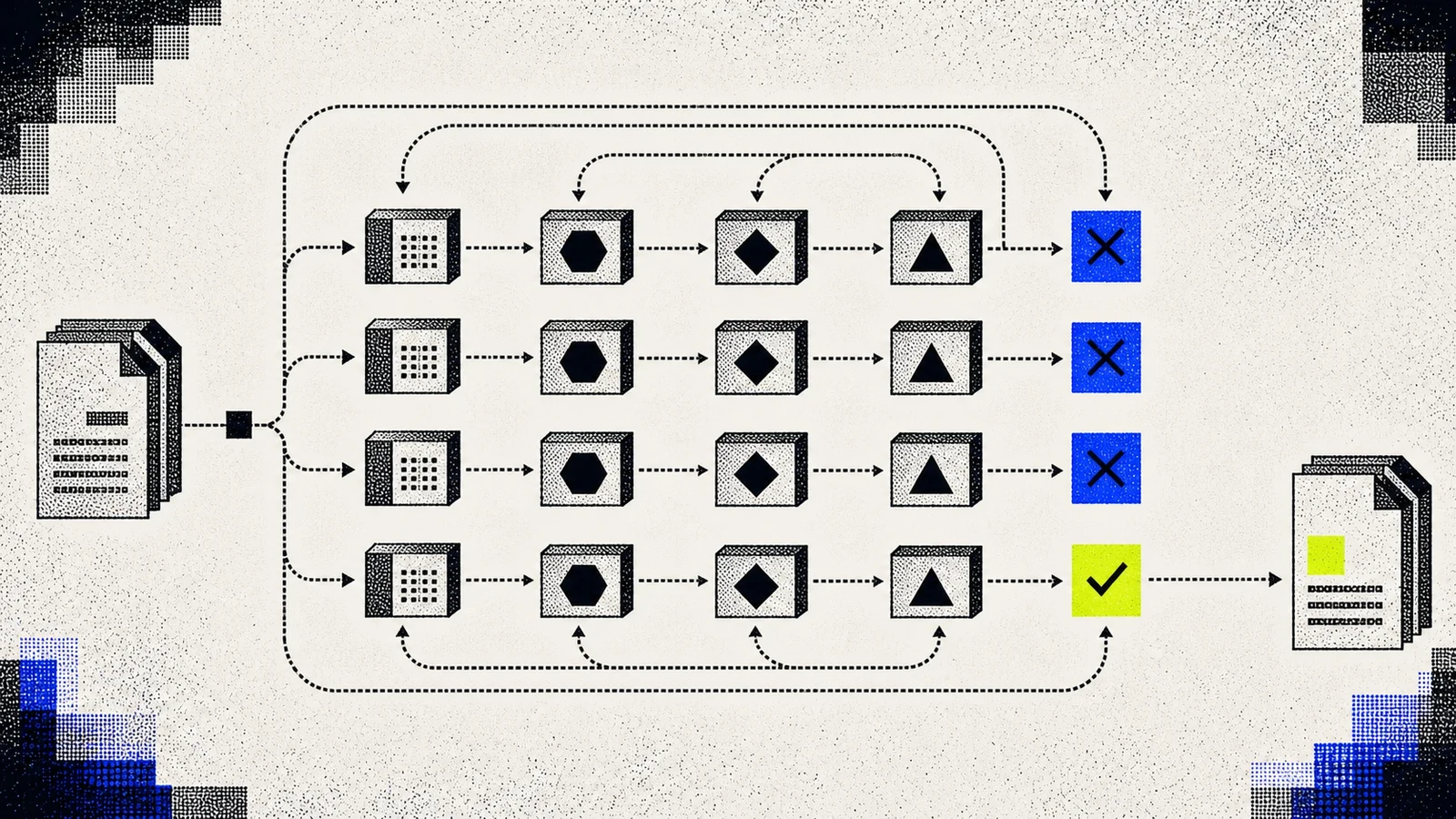
Competitor gap automation is an autonomous operational workflow, not a one-time audit. It is a system designed to ingest competitor content, vectorize it into mathematical embeddings, and query it against high-intent persona models to find what is missing.
We are moving from “Keyword Gaps” (Do they rank for ‘X’?) to “Semantic Gaps” (Did they fail to answer the implication of ‘X’?). This evolution demands a competitive keyword research methodology that goes beyond volume and difficulty metrics.
The Shift to Semantic Precision
For years, SEOs operated on a simple, flawed logic: If a competitor ranks for a keyword, we must also write a page for that keyword. This leads to content parity—a sea of identical, low-value blog posts.
Generative Engine Optimization (GEO) demands more. Search engines and AI answer engines (like ChatGPT search and Perplexity) don’t just match keywords; they construct answers based on comprehensive entity relationships. If your competitor’s content lacks depth on specific sub-entities, an agent-driven gap analysis will catch it.
We aren’t looking for keywords. We are looking for unanswered logic. We are looking for the questions a CTO asks after they read the generic blog post.
The Flaw of Traditional Keyword Gap Analysis
Why is the industry standard failing? Because it lacks context.
The Diagnosis: Blindness to Intent
Traditional manual audits often rely on exact or broad keyword matching. They scrape the HTML, look for the string “CRM integration,” and check if you have a page with that string. This is a binary assessment in a nuanced world.
The Technical Failure: Let’s say your competitor has a 2,000-word guide on “CRM Integration.” A traditional tool says, “Gap Closed.” But an LLM analysis reveals that while they cover the benefits of integration, they completely miss the technical constraints regarding OAuth2 authentication flows or rate limiting.
To a generic SEO tool, there is no gap. To a technical buyer, the gap is massive. That missing technical detail is where trust is built and where the deal is won.
The Speed of Information
The second failure point is velocity. Manual gap analysis happens, at best, monthly. By the time you identify a gap, brief a writer, and publish, the market has moved.
Content velocity automation is the antidote. By automating the detection phase, you reduce the time-to-insight from weeks to minutes. You don’t wait for a quarterly review to find out your competitor is ignoring a new regulatory standard; your system alerts you the day they publish their inadequate content.
Why it matters: In B2B SaaS, many high-intent searches are long-tail conversational or specific technical questions. Legacy tools often categorize these as “zero volume” because they lack historical data. Yet these queries can carry the highest Revenue per Visit (RPV).
Keyword gaps versus semantic gaps at a glance
Keyword gaps versus semantic gaps
A keyword gap asks whether they rank for X. A semantic gap asks whether they answered what X implies.
| Aspect | Keyword gap | Semantic gap |
|---|---|---|
| Question | Do they rank for X? | Did they fail to answer the implication of X? |
| Unit of analysis | Keyword strings and rankings | Full content as vectors, compared by meaning |
| Example: a 2,000-word CRM integration guide | Reads as gap closed | Misses OAuth2 authentication flows and rate limiting |
| Zero-volume questions | Often hidden, because tools lack historical data | Found by querying with high-intent persona questions |
| Cadence | Quarterly export, monthly at best | Continuous, with an alert the day a competitor publishes |
| Tools | SEMrush or Ahrefs Content Gap exports | Crawler, embedding model, vector database and an LLM |
| Typical outcome | Content parity: more posts like theirs | Technical assets on what nobody has answered |
Implementing Semantic Distance Modeling with LLMs
To automate this, we must stop treating content as words and start treating it as data. We use semantic distance modeling.
Semantic distance modeling is a computational method that quantifies how closely related two concepts are within a vector space. In SEO, it identifies the gap between a searcher’s intent and existing content, revealing high-value topics that competitors have failed to address adequately.
Imagine a multi-dimensional graph:
- Cluster A represents the perfect, comprehensive answer a user needs.
- Cluster B represents your competitor’s actual content.
- The empty space—the mathematical distance—between Cluster A and Cluster B is your Revenue Gap.
Vectorizing Competitor Content
To calculate this distance, we need to turn text into numbers. This is the “Engine Room” of the strategy.
The Architecture
- Automated SERP Data Ingestion: We use Python scripts to scrape the top 10 results for a target topic. (See our guide on automated SERP data ingestion for scraping frameworks).
- Chunking: We cannot feed a 5,000-word whitepaper into an embedding model as a single block. We chunk the content into logical passages (e.g., 250-500 tokens).
- Embedding: We pass these chunks through an embedding model (such as OpenAI’s
text-embedding-3-large). This converts the text into a vector—a list of floating-point numbers representing the semantic meaning of the text. - Storage: These vectors are stored in a Vector Database like
Pinecone,Milvus, orChromaDB.
Here is a simplified view of how we vectorize a competitor’s asset programmatically:
import openai
# LangChain v1: splitters and loaders live in their own packages
from langchain_text_splitters import RecursiveCharacterTextSplitter
from langchain_community.document_loaders import WebBaseLoader

# 1. Load Competitor Content
loader = WebBaseLoader("https://competitor.com/weak-content-page")
data = loader.load()

# 2. Chunk the Content
text_splitter = RecursiveCharacterTextSplitter(chunk_size=500, chunk_overlap=50)
docs = text_splitter.split_documents(data)

# 3. Create Embeddings (The Mathematical Representation)
def get_embedding(text):
    response = openai.embeddings.create(
        input=text,
        model="text-embedding-3-large"
    )
    return response.data[0].embedding

# Example Output: A vector list like [0.0023, -0.0123, 0.056...]
vectors = [get_embedding(doc.page_content) for doc in docs]

print(f"Vectorized {len(vectors)} chunks of competitor data.")
Note: This script is the foundation. In a production environment, these vectors are pushed directly to your vector database for querying.
By performing LLM content auditing at this level, we aren’t “reading” the content. We are mathematically mapping the competitor’s knowledge base.
Querying for Missing Entities
Once the competitor’s content is vectorized, we use Agentic Workflows to interrogate the data. We act as the “Prosecutor.” We ask the LLM to find what isn’t there.
The Prompt Logic
We do not ask, “What is this article about?” We ask, “What is missing?”
- System Role: You are a Senior Solutions Architect analyzing technical documentation for a SaaS product.
- Context: The user is a CTO looking for integration risks.
- The Query: “Review the provided context (the competitor’s vectorized content). Identify 5 specific technical constraints, security protocols, or API limitations that are completely absent from this text but are critical for an enterprise deployment.”
The LLM will scan the vector store. If the competitor discusses “Easy Setup” but fails to mention “Single Sign-On (SSO) configuration via SAML,” the LLM flags it.
This is the gap.
Entity Extraction over Keyword Matching
This process focuses on Entities—specific nouns, technologies, standards, and concepts.
- Competitor writes about: “Cloud Security.”
- LLM detects missing entity: “SOC 2 Type II Compliance.”
- LLM detects missing entity: “Data Residency in EU Zones.”
Your strategy is now clear: You do not write another generic “Cloud Security” post. You engineer a technical asset specifically titled “Achieving SOC 2 Compliance and Data Residency with [Your Solution].”
How the pipeline finds missing entities
From competitor pages to missing entities
The first four steps map what competitors cover. The query step asks the model what is absent, not what the page is about.
- 01
Ingest
Python scripts scrape the top 10 results for a target topic.
OutputCompetitor pages - 02
Chunk
Split each page into logical passages of 250 to 500 tokens.
OutputPassages - 03
Embed
An embedding model such as text-embedding-3-large turns each passage into a vector.
OutputOne vector per passage - 04
Store
Push the vectors to a vector database such as Pinecone, Milvus or ChromaDB.
OutputA searchable competitor corpus - 05
Query
Prompt the LLM as a solutions architect advising a CTO: list what is absent from this content.
OutputMissing items, e.g. SSO configuration via SAML - 06
Extract entities
Name the missing standards and concepts. A cloud security page lacks SOC 2 Type II and EU data residency.
OutputA brief for one technical asset
From Data to Dominance: The Strategic Application
Data without execution is vanity. Once we have identified these semantic gaps, we must quantify their value. We don’t chase every gap; we chase the ones that drive revenue.
Prioritizing via Revenue Potential
To prioritize production, I use a conceptual framework called Gap Revenue Potential (GRP). While not a standard accounting metric, it provides a logical filter to separate low-value informational gaps from high-value commercial gaps.
GRP = search volume × intent score × (1 − competitor semantic coverage)
- Search Volume: Traditional demand.
- Intent Score: A custom weighted variable (1-10) based on how close the query is to a purchase decision (e.g., “pricing” = 10, “what is” = 2).
- Competitor Semantic Coverage: An internal score (0-1) derived from our vector analysis, where 1 is perfect coverage and 0 is a total gap.
If the Competitor Semantic Coverage is 0.2 (weak) and the Intent Score is high, the GRP is massive. This is a Red Alert priority for your content team.
Worked example: the “migration” gap
A hypothetical illustration of how the scoring plays out. A competitor dominates the keyword “Enterprise ERP.”
- Traditional Audit: The competitor has 50+ pages on ERP benefits, features, and pricing. Standard tools show zero keyword gaps.
- Semantic Analysis: The vector analysis scores the competitor’s coverage of “legacy data migration protocols” at 0.1 across those pages. They barely mention how to actually move the data.
- The Execution: The plan becomes a small set of high-intent assets focused on the pain of migration: “SQL to NoSQL migration patterns,” “Preserving metadata during import,” and “API scripts for bulk transfer.”
- The Logic: These pages will never get millions of views. They target the right views, because they address the buyer’s primary fear: “How do I switch without losing data?”
Score a gap with the revenue potential formula
Gap revenue potential for two gaps
Score the gap you found against one you might chase instead. Low competitor coverage and high intent outweigh raw volume.
Architecting the Continuous Loop
A one-time audit is a snapshot. A Growth Engine is a film.
Your market changes every week. Competitors publish new features; Google updates its algorithm; user behavior shifts. If you are manually running this process, you are already behind.
Automation as a Standard
This workflow must be automated.
- Weekly Crawl: A Python script (Cron Job) crawls key competitor sitemaps for new URLs.
- Vector Update: New content is automatically chunked and added to your Vector Database.
- Gap Analysis Agent: An AI agent runs the semantic distance query against your core topic clusters.
- Alerting: If a significant gap is found (or if a competitor suddenly closes a gap you previously owned), the system pushes an alert to your central intelligence hub. (See how to build your central intelligence hub here).
This is Operational Intelligence. Your marketing team stops guessing what to write. They wake up on Monday morning with a prioritized list of high-intent assets required to defend your market position.
Stop Guessing. Build the Engine.
The difference between a “blog” and a “revenue engine” is engineering.
Most marketing teams operate on intuition and lag indicators. By deploying competitor gap automation, you shift to lead indicators. You see the market through the lens of data and vector mathematics.
You don’t need more creative brainstorming sessions. You need technological sovereignty over your niche.
Your competitors are writing for keywords. You will write for the semantic gaps in their logic. And in those gaps, you will find your revenue.
Audit your system. If you are still doing this manually, you are choosing to be inefficient.
Engineer the solution.
LLM-driven gap analysis is one agent in a broader agentic SEO system — the loop that decides what to write, ship, and prune.
Q01 Why are semantic gaps better than keyword gaps? +
Q02 What tools do I need to find semantic gaps? +
Q03 How often should I run gap analysis? +
Q04 How is LLM-based gap analysis different from Ahrefs Content Gap? +
- [01] GUIDE
- [02] DOC
- [03] DOC
- [04] BLOG